
Nigeria’s Cement Consumption Still One Of The Lowest In The World Despite High Price, Says HBM

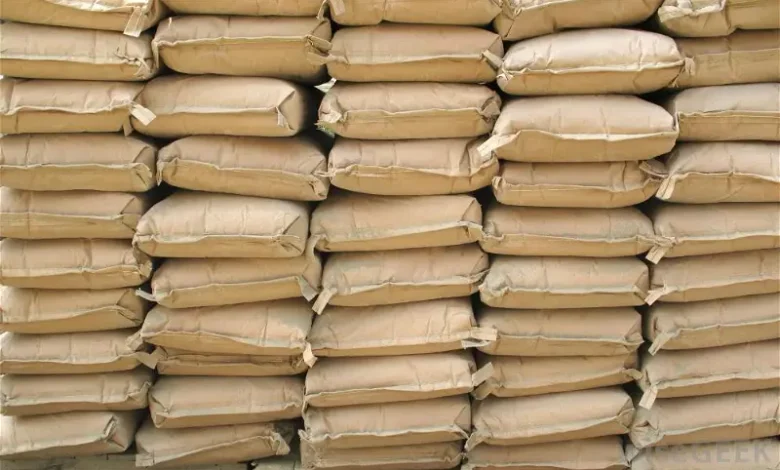
Stakeholders in Nigeria’s building materials industry have said that Nigeria’s cement consumption per capita remains one of the lowest in the world.
ADVERTISEMENT

FOR ZERO TEAR CHILDBIRTH SAFETY GUIDE.. …Click the link below:
https://app.expertnaire.com/product/7259956958/8661954043

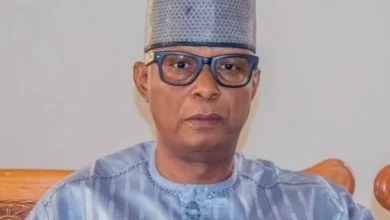
The Chief Executive Officer of HBM Nigeria, Mr Lolu Alade-Akinyemi, made this known over the weekend in Lagos at the Experiencing Panterra event.
The event featured the award presentation to the foundation’s 2026 finalists, launch of the Panterra report, Panterrium investment management product launch and other activities.
Alade-Akinyemi, who was represented by the General Manager of Readymix Concrete at HBM, Emmanuel Ilaboya, said there is a huge opportunity in the sector despite its challenges.
According to him, cement consumption per capita in Nigeria is currently below 150kg. He compared it to Egypt with about 500kg and South Africa with about 700kg, noting that the figures show how much growth potential exists in Nigeria.
He also disclosed that capacity utilisation per manufacturer is still between 20 and 30 percent, saying a lot can still be done to improve the sector.
Alade-Akinyemi attributed the high cost of cement in Nigeria to the impact of exchange rate. He explained that most of what is used to produce cement and concrete is imported, and even gas and oil produced locally are paid for in dollars.
He said the good news is that the exchange rate has been fairly stable in the last year, which allows manufacturers to predict and plan their operations.
He added that the company is committed to ensuring that the effect of raw material importation is not passed to customers through operational efficiency. He noted that the company ranks between seven and eight on the stock exchange market in terms of capitalisation.
On why cement is expensive in Nigeria, he blamed power supply, saying no cement manufacturer in Nigeria can rely on the national grid. According to him, companies have to build their own power plants to produce electricity, which is capital intensive and adds to cost.
In his welcome address, the Chief Executive Officer of Panterra, Tayo Odunsi, said investors demand transparency and not just honesty. He said the real estate sector needs transparency more than most sectors because it is opaque and has no standard repository for information.
Odunsi said the company launched two key reports at the event to provide insights and transparency on the Nigerian construction market and the West African property market.
He said Panterra is a regulated fractional real estate investment product that puts people at the centre of its operations.
Also speaking, the Chief Investment Officer at Panterra, Mr Ayo Ibaru, said currency stability, financing depth, Global South partnerships and security now drive West African real estate performance.
Ibaru said local capital and builders are increasingly financing growth in the region, with growing regional self-financing plus capital from Gulf, Turkish and Asian investors diversifying the investor base away from Western sources.
He said the Dangote Refinery has made the Lekki Free Trade Zone one of the region’s most active industrial corridors, showing that indigenous capital sees Nigerian infrastructure as investable.
He added that the 15.6 billion dollars Abidjan-Lagos Corridor will link five countries and an urban population of 173 million by 2050, creating major real estate opportunities. He argued that despite risks, local and Global South capital is underwriting infrastructure at scale, generating opportunities in industrial zones, port cities and logistics corridors.
ADVERTISEMENT
FOR ZERO TEAR CHILDBIRTH SAFETY GUIDE.. …Click the link below:
https://app.expertnaire.com/product/7259956958/8661954043