
Lagos Housing Crisis: Sanwo-Olu Unveils Plan to Tackle 3.3 Million Housing Deficit

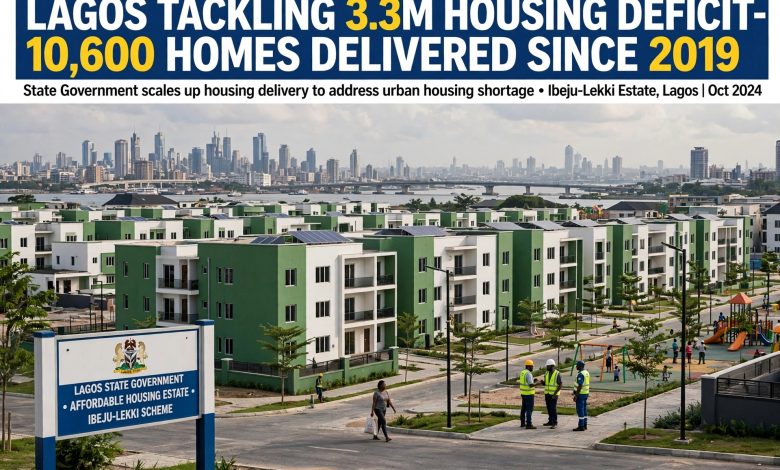
The Lagos State Government has disclosed plans to address the state’s estimated 3.3 million housing deficit through improved housing delivery, digital planning approvals, rent-to-own schemes and public-private partnerships.

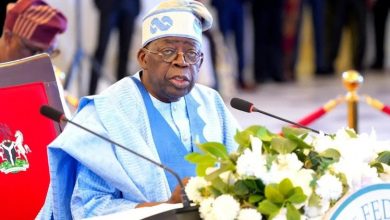
Governor Babajide Sanwo-Olu made this known at the seventh edition of the Real Estate Discussions and Awards REDA organised by ThinkMint Nigeria held in Ikeja, Lagos.

The governor, who was represented by the Commissioner for Housing, Moruf Akinderu-Fatai, said Lagos is adopting new measures to expand housing supply and improve access to affordable homes.
According to Sanwo-Olu, Lagos faces a 3.3 million unit housing deficit driven by a rapidly growing population of over 17.8 million people.
He noted that under the THEMES+ Development Agenda, the state has improved planning certainty through digital permit processing and updated master plans while delivering thousands of new housing units.
Sanwo-Olu explained that financial support, mortgage and rent-to-own schemes, and public-private partnerships have been instrumental in expanding housing supply and creating jobs in the state.
He revealed that the state has delivered more than 10,600 homes since 2019, while investments in transportation infrastructure including rail networks and strategic transit corridors are expected to support real estate development and economic growth.
He also highlighted efforts to protect investors and property owners through stronger market regulation, including the Lagos State Real Estate Regulatory Authority LASRERA’s crackdown on fraudulent practitioners and proposed tenancy reforms.
Through digital planning approvals, public-private partnerships, and financing schemes like rent-to-own, the state has delivered over 10,600 homes since 2019 while advancing key transit corridors such as the rail network to boost real estate and economic development. To protect investors and residents alike, the administration emphasised strengthened market regulation through LASRERA’s crackdown on fraudulent practitioners alongside upcoming tenancy reforms, he said.
Speaking at the conference, the Special Adviser to the Governor on e-GIS and Urban Development, Olajide Babatunde, said Lagos witnesses an estimated annual population influx of about 600,000 people.
Babatunde said the Lagos Enterprise Geographic Information Service has digitised more than 70 per cent of land records, reducing property search times from weeks to minutes.
He said the initiative has improved coordination among regulatory agencies, making land transactions more efficient and development approvals more predictable.
According to him, real estate forms the bedrock of the Lagos economy, addressing the state’s two million-unit housing deficit and annual influx of 600,000 residents. He added that the transformative impact of the e-GIS has made land assets bankable and approvals predictable.
In a goodwill message, the Deputy Governor, Dr Obafemi Hamzat, represented by the Permanent Secretary, Ministry of Housing, Abdulhafis Toriola, described real estate as a critical driver of sustainable economic development.
Hamzat said real estate is not viewed merely as brick and mortar, but as a critical lever for sustainable economic development, adding that Lagos’s ambition to become a modern, inclusive and globally competitive megacity depends on a vibrant, transparent and resilient property market.
Also speaking, the former President of the International Real Estate Federation, Africa Region, Chudi Ubosi, said Nigeria’s housing deficit presents opportunities for investment, employment generation and economic growth.
The Minister of Housing and Urban Development, Muttaqha Darma, represented by the Head of the Federal Lands Unit, Lagos Field Headquarters, Abiodun Oloko, called for stronger public-private partnerships to address the country’s housing challenges.
The Minister identified affordable housing, access to finance, responsible investment, transparent land administration and cost-effective construction technologies as priorities for the sector.
The two-day conference brought together policymakers, developers, investors and other stakeholders to discuss real estate and economic development, with focus on energy supply, property financing, asset monetisation, transparency, technology and sustainable development.
The event also featured the REDA Awards which recognised individuals and organisations for their contributions to Nigeria’s real estate industry.