

Report: Housing supply contracting as cement price rises by 367% in seven years | Prestige Real Estate News

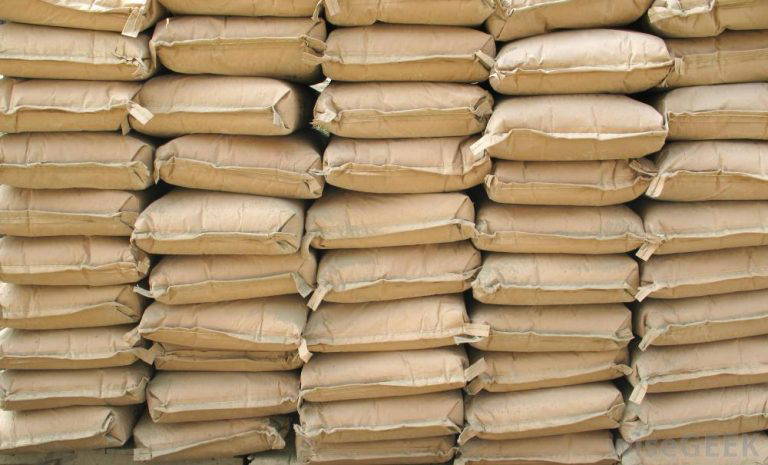

PropComms Africa, a real estate intelligence, media, and growth platform, says Nigeria’s housing supply is contracting amid rising construction costs, driven by a sharp increase in cement prices.
The firm, in its “Build Cost, Broken Market” report released in March, the price of a 50kg bag of cement — a critical construction input — has risen from between N2,500 and N3,000 in 2019 to between N11,500 and N15,000 as of March 2026.

The report noted that the increase represents a surge of up to 367 percent in seven years and 30 percent within the first quarter (Q1) of 2026.
The firm added that the rising cost of other building materials has also risen, with steel up 20 percent, sharp sand 25 percent, and iron rods increasing by more than 120 percent in select periods.
“Projects are being abandoned, budgets renegotiated, and housing supply is contracting precisely when Nigeria’s reported 28-million-unit deficit demands the opposite,” the report said.
“Urban rents have more than doubled. Homeownership has become economically inaccessible for most low and middle-income Nigerians.”
PropComms Africa said at the centre of the crisis is a highly concentrated oligopoly with three manufacturers: Dangote Cement, BUA Cement, and Lafarge Africa, collectively controlling over 95 percent of domestic supply.
According to the firm, prior to 2020, a 50kg bag of cement sold for between N2,500 and N3,000, with prices largely stabilised by healthy competition among producers, consistent capacity expansion, and periodic government interventions.
The report said the post-pandemic recovery triggered a surge in construction activity that outpaced supply, pushing prices up to between N3,300 and N3,500 by 2021 — a 33 percent increase from pre-pandemic levels.
“Prices that had settled at approximately ₦10,500 in Q4 2025 resumed their climb sharply. Manufacturers added ₦500 per bag in January 2026 alone when new tax measures took effect. By March 2026, market surveys across Lagos, Abuja, Ogun, and southeastern states confirmed prices between ₦11,500 and ₦15,000 – a 30% increase within a single quarter,” the report added.
‘MARKET CONCENTRATION, LACK OF COMPETITION DRIVING CEMENT PRICES’
PropComms noted that while manufacturers have attributed high prices to cost pressures such as energy prices, foreign exchange volatility, logistics bottlenecks, a complex tax, and levy environment, the factors do not fully explain the pricing gap.
The report attributed the trend to market concentration and the systematic absence of competitive pressure in the sector.
PropComms Africa said Nigeria’s cement capacity currently stands at about 65 million metric tonnes, compared to annual consumption of approximately 32 million tonnes.
To address the issue, the firm called for structural reforms to promote competition in the sector.
The report recommended opening up access to limestone deposits through transparent licensing processes to enable new entrants.
PropComms also proposed separating manufacturing from distribution networks to prevent dominant producers from limiting market access for smaller competitors.
The firm added that the Federal Competition and Consumer Protection Commission (FCCPC) should strengthen antitrust enforcement by investigating pricing practices and market conduct in the cement industry.
On March 12, the commission said it has commenced an investigation into cement prices across the country.
The FCCPC said the probe followed a report submitted to the agency, noting that an investigative team had already been set up.
– Culled from TheCable