

‘Nigeria needs 800,000 new homes annually to keep up with population growth’ | Prestige Real Estate News
PAC Research unveils reports on housing markets

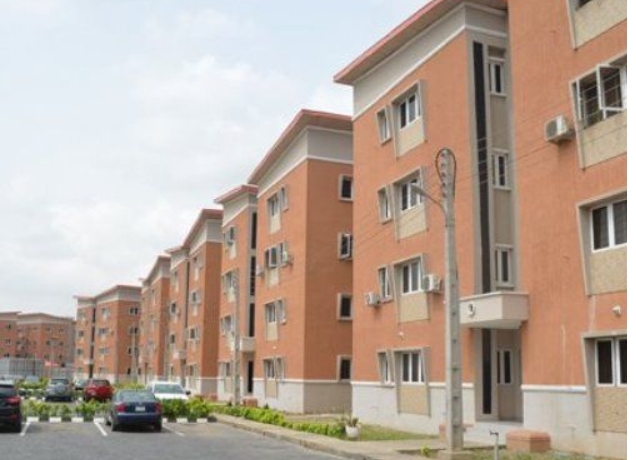
Nigeria currently needs about 800,000 new homes to keep pace with its population growth and demand for new homes could triple by 2030.
Research reports by PAC Research indicated that national housing deficit stands at more than 28 million units, with Lagos State alone accounting for a shortfall of 3.4 million units.

The two research publications: “From Shortage to Opportunity: Unlocking the Billion-Dollar Housing Market” and “Lagos Housing Report: A Treasure Trove of Possibilities”, provided one of the most comprehensive assessments yet of Nigeria’s housing ecosystem.
The reports however noted that despite the scale of the challenge, the housing deficit represents a major investment opportunity, estimating the market’s potential value in trillions of naira.
The national report, which features a foreword by the Managing Director of the Federal Mortgage Bank of Nigeria (FMBN), Shehu Usman Osidi, noted that Nigeria needs approximately 800,000 new homes annually to keep pace with population growth. That figure is projected to rise to 2.0 million homes per year by the end of the decade. The report also highlighted the country’s low mortgage penetration, currently below one per cent of GDP, compared with 77 per cent in the United States and 31 per cent in South Africa.
“Nigeria stands at a critical juncture where rapid urbanization and economic transformation converge to create unprecedented opportunities,” the report stated.
The publication outlined innovative financing solutions aimed at bridging the housing gap, including Real Estate Investment Trusts (REITs), diaspora mortgage products, and the Renewed Hope Housing Scheme.
A major section of the report focused on Lagos, Nigeria’s commercial hub, which attracts more than 475,000 new residents annually.
According to the report, Lagos currently has an estimated housing stock of 1.49 million units, while demand stands at approximately 4.69 million units, leaving an accessible market gap of about 2.81 million units.
Among the report’s key findings was a growing preference for smaller housing units, with more than 52 per cent of residents favoring one- and two-bedroom apartments, reflecting strong demand for affordable and compact living spaces.
The report also highlighted strong rental yields in prime locations such as Lekki and Victoria Island, where three-bedroom apartments in Victoria Island can command annual rents of up to N8 million.
To address the housing challenge, the report recommended the adoption of incremental housing models, deeper housing finance penetration, and stronger public-private partnerships (PPPs), among other measures.
Osidi described the reports as timely call to action.
He said: “This report is more than an analysis — it is a call to action. The time to invest in Nigeria’s housing market is now. The rewards extend beyond financial returns to include inclusive growth and urban resilience”.
Oniru of Iruland and former Lagos State Commissioner for Housing, Oba Abdulwasiu Lawal described the Lagos report as an essential guide for stakeholders in the real estate sector.
“As a former Commissioner of Housing, I attest that the Lagos Housing Report is a worthy guide. It upholds strong research standards and highlights emerging corridors such as Lekki, Ajah, and Epe as the next frontiers for real estate investment,” Lawal said.