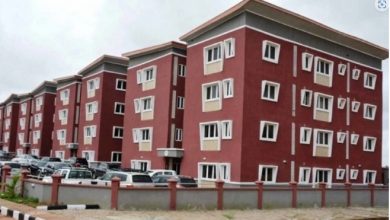

How skyrocketing building materials cost is holding back real estate …as sector rises in ranking, contribution to GDP | Prestige Real Estate News


The Real Estate sector in Nigeria has shown remarkable resilience and growth, ranking as the third-largest economic sector in the country and contributing significantly to the country’s GDP.
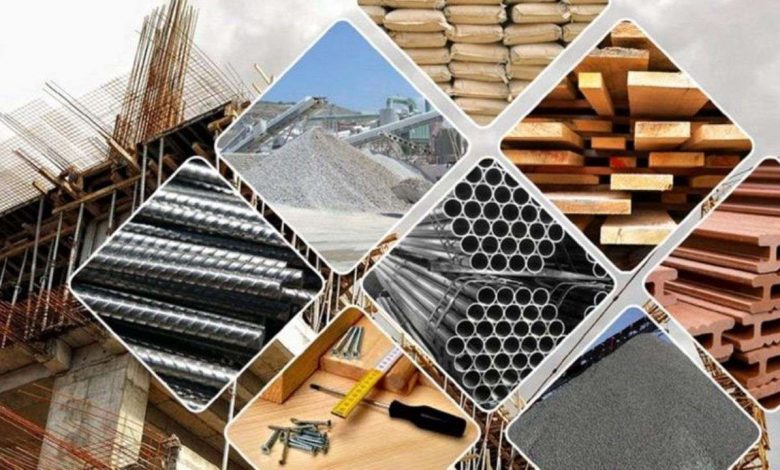
This achievement, which is attributed to several factors, including increased demand for residential space and urbanization pressures, is however being held back by rising cost of building materials, especially cement, which has seen over 30 percent price increase in the last three to six months.

The 2025 GDP rebasing by the National Bureau of Statistics (NBS) marked what CFG Advisory in its recent report called “a structural revelation” in the sector. This exercise fundamentally transformed the understanding of the sector’s economic weight.
According to the report, the impact of 2025 GDP rebasing on real estate sector metrics shows that, by 2024, post-rebasing figures indicate real estate output reaching ₦41.3 trillion in nominal terms, solidifying its position as the third-largest sector.
“As of Q1 2024, the NBS reported that real estate contributed 5.20% to real GDP, ranking the sector third behind crop production (17.58% of nominal GDP) and trade (17.42%).
The sector displaced crude petroleum and natural gas, which fell to fifth position with approximately 4–5% of GDP. By Q1 2025, the sector’s performance accelerated further, showing nominal contribution at ₦16.42 trillion (in Q1 alone), which represents 17.4% of quarterly nominal GDP,” the report says.
The sector’s growth trajectory shows its ranking moved up from 6th in 2022 to 5th in 2023, and to 3rd in 2025, while its nominal share of GDP within the same period jumped from 2.9-3.6% to 6.2%.
Unfortunately, further improvements in the sector are now being hampered by the huge impact of rising prices of building materials which private estate developers say “is rapidly becoming a major challenge to housing delivery and infrastructure development in Nigeria.”
Available industry data and market observations show that the price of a 50kg bag of cement, which sold for about ₦7,500 in the last quarter of 2025, rose to between ₦9,000 and ₦10,000 at the beginning of 2026. The price has continued to climb and is now selling for between ₦11,500 and ₦15,000 in several parts of the country.
Similarly, within the last quarter, steel prices have gone up 20%, sharp sand, 25%, and wood/granite prices have also increased, but at a slower rate.
These increases are already having impact on asset prices, especially urban rents, which have gone up over 100%. “The impact of the surging input prices is evident on housing and rent prices across Nigerian cities,” Timothy Nubi, a Professor and Founding Director of Centre for Housing and Sustainable Development (CHSD) at the University of Lagos, confirmed.
Nubi cited Abuja where, he said, annual rent for a self-contained apartment now stands at between N800,000 and N1.5 million, up from N400,000 per annum. “In Lagos, annual rent for a self-contained apartment is N800,000 to N1million, up from N400,000, while Kano and Port Harcourt are also seeing significant increases,” he added.
These developments are already affecting rental services which was one of the factors that led to the improvement in the ranking of the sector and also its contribution to the GDP.
Akintoye Adeoye, President, Real Estate Developers Association of Nigeria (REDAN), noted that the combined effect of these rising costs is that developers are now facing serious financial pressures, which are already leading to delays in project delivery, scaling down of housing developments, and, in some cases, the suspension or abandonment of projects,” he said.
“This situation is particularly worrisome when we consider that Nigeria is already confronted with a significant housing deficit. Any development that further increases the cost of building houses will ultimately make homeownership even more difficult for millions of Nigerians.
We must also note that persistent increases in the prices of building materials can create unintended consequences within the construction industry. When costs rise beyond manageable levels, there is always the risk that some individuals may resort to the use of substandard materials in an attempt to cut costs, which can ultimately compromise the quality and safety of buildings,” the REDAN president noted.
Adeoye called on the Federal Ministry of Housing and Urban Development and other relevant government institutions to urgently engage stakeholders in the building materials value chain with the aim of stabilizing the price of cement and other essential construction materials.
He also appealed to cement manufacturers and other industry players to work collaboratively with the government and stakeholders to ensure that the housing sector remains stable and capable of delivering affordable homes to Nigerians.
– Culled from BusinessDay